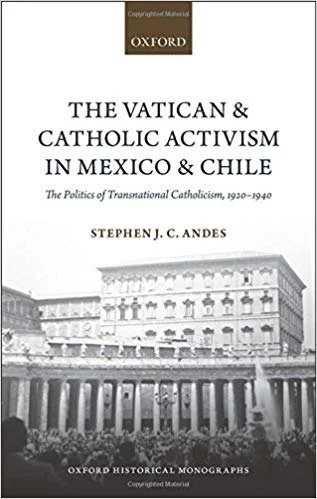
Why did the Vatican favor negotiation over armed Catholic resistance during Mexico’s Cristero War? Drawing on Vatican archival research, Stephen Andes places the conflict within Rome’s wider diplomatic strategy and examines its consequences for religious identity in postrevolutionary Mexico.
The article explores tensions between Catholic activists who sought political influence and Vatican officials who preferred diplomatic agreements and organizations supervised by the Church hierarchy. Rather than treating Mexican Catholicism as a unified opponent of the revolutionary state, it reveals competing visions of how faith should shape public life. Rome’s pragmatic approach helped produce the settlements of 1929 and encouraged Mexican Catholic Action as a model of religious participation separated from party politics.
These changes did not eliminate Catholic militancy. Some groups continued political struggles, while others concentrated on religious education and social activity. Andes argues that conflict and accommodation coexisted within the Church, reshaping Catholic identity through negotiations among laypeople, bishops, and Rome. The continuing cultural memory of the Cristero struggle underscores the lasting importance of those divisions.
Stephen J. C. Andes · Estudios: filosofía, historia, letras 8(95), Winter 2010, pp. 65–97.
The full paper is in Spanish; the summary above is in English.
Follow the source.
From the archive: an editorial summary with a link to the original. Downloads supplied by Stephen Andes; available above.